
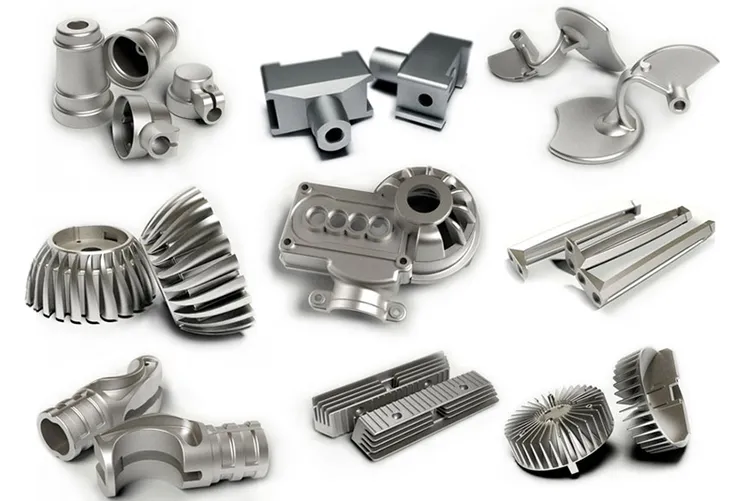
In modern manufacturing, combining die casting with CNC machining offers a powerful way to produce high-quality metal components with speed, precision, and cost-effectiveness. This hybrid approach is widely used in industries like automotive, aerospace, electronics, and consumer goods.
🔩 What Are Die-Casted Machined Parts?
Die-casted machined parts are components that are first formed using die casting—a process where molten metal is injected into a steel mold under high pressure—and then refined using CNC machining to achieve tighter tolerances, improved surface finish, or added features.
This two-step process allows manufacturers to:
- Rapidly produce near-net-shape parts
- Maintain dimensional accuracy
- Add critical details like threads, sealing surfaces, or precision bores
⚙️ Why Combine Die Casting with Machining?
Die casting alone is excellent for:
- High-volume production
- Complex geometries
- Good surface finish
But it has limitations in:
- Tolerance control
- Sharp internal features
- Functional surfaces requiring high precision
CNC machining complements die casting by:
- Removing excess material
- Refining critical dimensions
- Creating features that casting alone can’t achieve
🧪 Common Materials
- Aluminum alloys (e.g., A380): lightweight, corrosion-resistant, ideal for automotive and electronics
- Zinc alloys: excellent for small, intricate parts with tight tolerances
- Magnesium: ultra-lightweight, used in aerospace and mobile devices
These materials are chosen for their castability and post-machining stability.
🧰 Typical Applications
| Industry | Example Parts |
|---|---|
| Automotive | Transmission housings, brackets, covers |
| Aerospace | Sensor enclosures, structural supports |
| Electronics | Heat sinks, connector shells |
| Consumer Goods | Appliance frames, tool bodies |
🧠 Design Considerations
When designing die-casted machined parts:
- Allow machining stock: Leave extra material where precision is needed
- Avoid thin walls near machined areas: Prevent vibration and deformation
- Plan for fixturing: Ensure the part can be securely held during machining
📦 Cost and Lead Time Benefits
- Die casting reduces raw material waste and speeds up initial shaping
- Machining adds precision without needing full billet processing
- Combined, they offer a balance of low unit cost and high performance